Cart
0
Last updated: 15 October 2026
You've bought good beans. The fastest way to waste them is the jar on the counter next to the kettle. Coffee starts losing flavour the day it's roasted, and how you store it decides whether you're still tasting the good stuff in week three or drinking something flat and papery.
Here's how we store beans at home and at the roastery in Hursley, how to tell when a bag has turned, and how to buy so it never gets that far.
What makes coffee go stale
Four things: air, light, heat and moisture. Air is the big one. Once roasted coffee meets oxygen, the oils and aromatics that give it flavour start to break down. Light and heat speed that up. Moisture makes it worse still, and it's why the fridge is a bad idea (more on that below).
Grinding multiplies the problem. Ground coffee has far more surface exposed to air, so it fades in hours rather than weeks. Whole beans buy you time.
Key takeaway: keep beans whole, sealed, dark and cool, and grind just before you brew.
How to store coffee beans at home
Keep them airtight
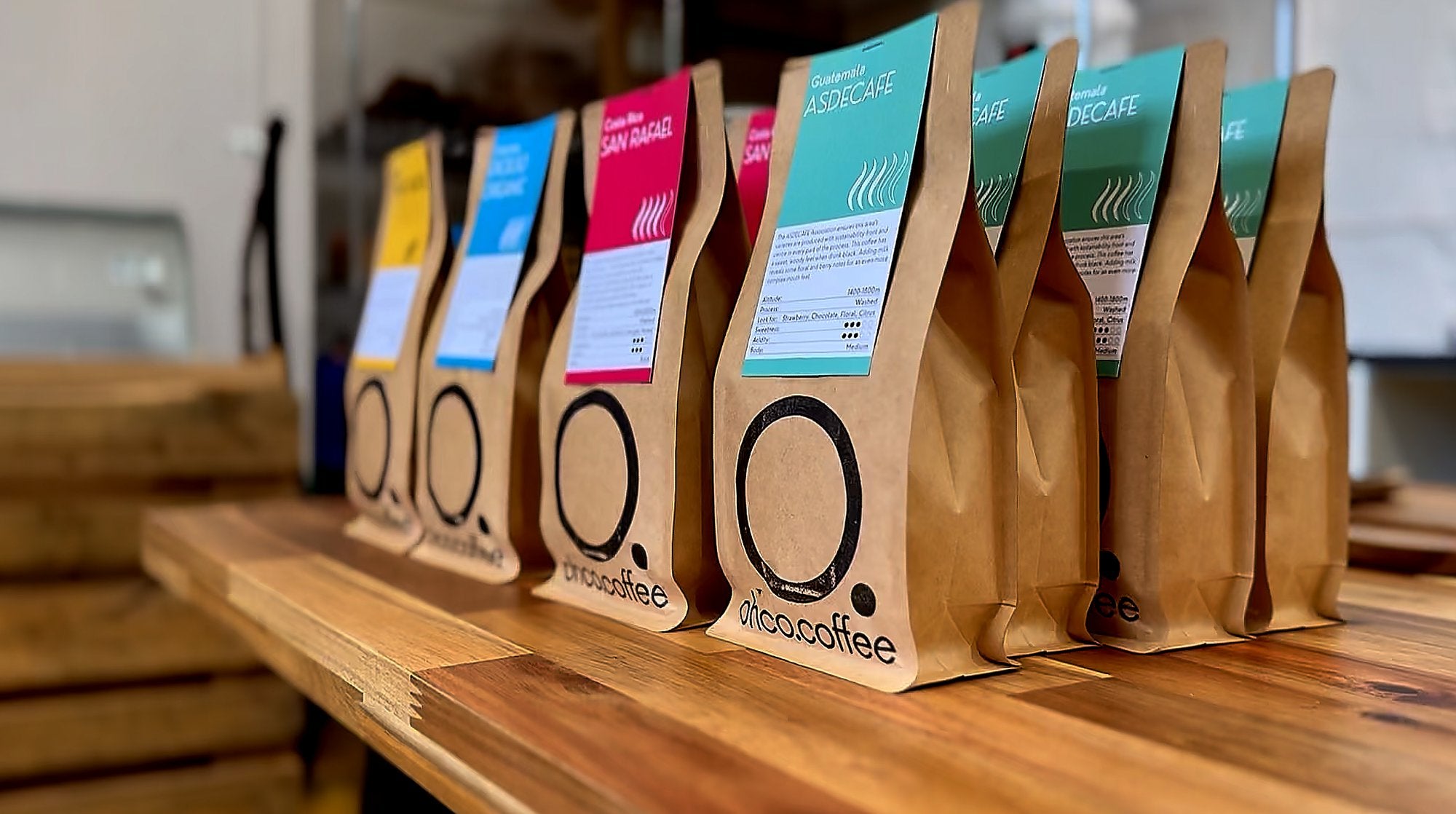
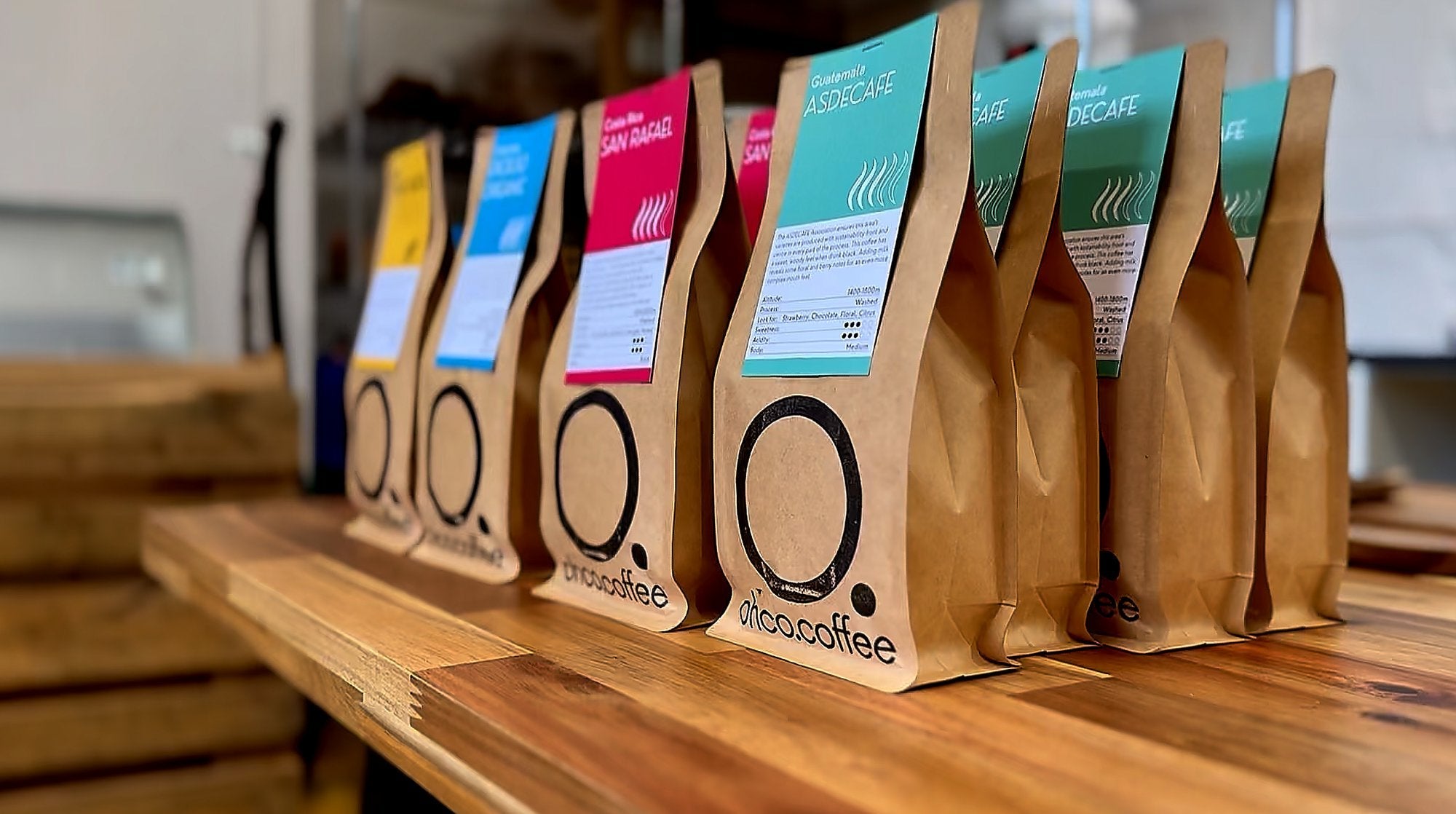
Our bags have a zip seal, so the simplest option is to keep your beans right where they are. Squeeze the air out and close the zip properly after every scoop, and the bag does the job. If your beans came in a bag without a seal, tip them into an opaque airtight canister. A canister that's mostly empty still holds a lot of air, so pick one that suits how much you buy.
Keep them dark
Clear glass jars look lovely on a shelf and do your coffee no favours. If you use one, keep it in a cupboard.
Keep them cool, not cold
A cupboard away from the oven, the kettle and sunny windowsills is ideal. Steady room temperature is what you're after.
Skip the fridge
Fridges are damp and full of smells, and coffee absorbs both. Every time you take the bag out, condensation forms on the cold beans. It's the worst of both worlds.
Freeze only what you won't use soon
The freezer works well for long-term storage if you do it properly. Split beans into airtight portions of about a week's worth, freeze them, and take out one portion at a time. Don't refreeze. You can grind straight from frozen; just let the portion reach room temperature before opening if it's going back in a canister.
How long do coffee beans stay fresh?
Freshly roasted coffee needs a few days to rest while it releases carbon dioxide. After that, most coffees are at their best for about a month. Filter and pour-over tend to shine earlier in that window; espresso often tastes better after a week or so of rest.
Past a month, beans are still perfectly safe to drink. They just won't taste the way the roaster intended. That's why a best-before date tells you so little. What matters is when the coffee was roasted.
How to tell if your coffee is stale
You don't need a lab. Use your nose, your eyes and your brewer.
- The smell has gone quiet. Fresh beans smell of something: chocolate, fruit, toasted nuts. Stale beans smell faint, dusty or like cardboard.
- No bloom. Pour a little hot water over fresh grounds and they puff up and bubble as gas escapes. Stale grounds just sit there and go dark.
- It tastes flat or papery. The sweetness and fruit go first, leaving a dull, hollow cup with a bitter edge.
- Your espresso runs fast. Shots pour quicker than usual with thin, pale crema, even though you haven't touched the grinder.
- It smells rancid. Darker roasts carry more oil on the surface, and old oil smells sour or like crayons. That bag is done.
Watch out: if your grinder settings keep drifting finer week by week to get the same shot, the beans are ageing, not your machine.
The simplest fix: buy smaller, buy fresher
The best storage tip isn't a gadget. It's buying an amount you'll finish within a few weeks. A 250g bag is about two weeks of coffee for one person drinking a cup or two a day.
That's exactly why we built the OHCO Coffee Club. You choose how often your beans arrive (every two weeks, monthly or every six weeks), so a fresh bag turns up just as the last one runs out. Members save 15% on every bag, and you can pause, skip or cancel any time, with no minimum term.

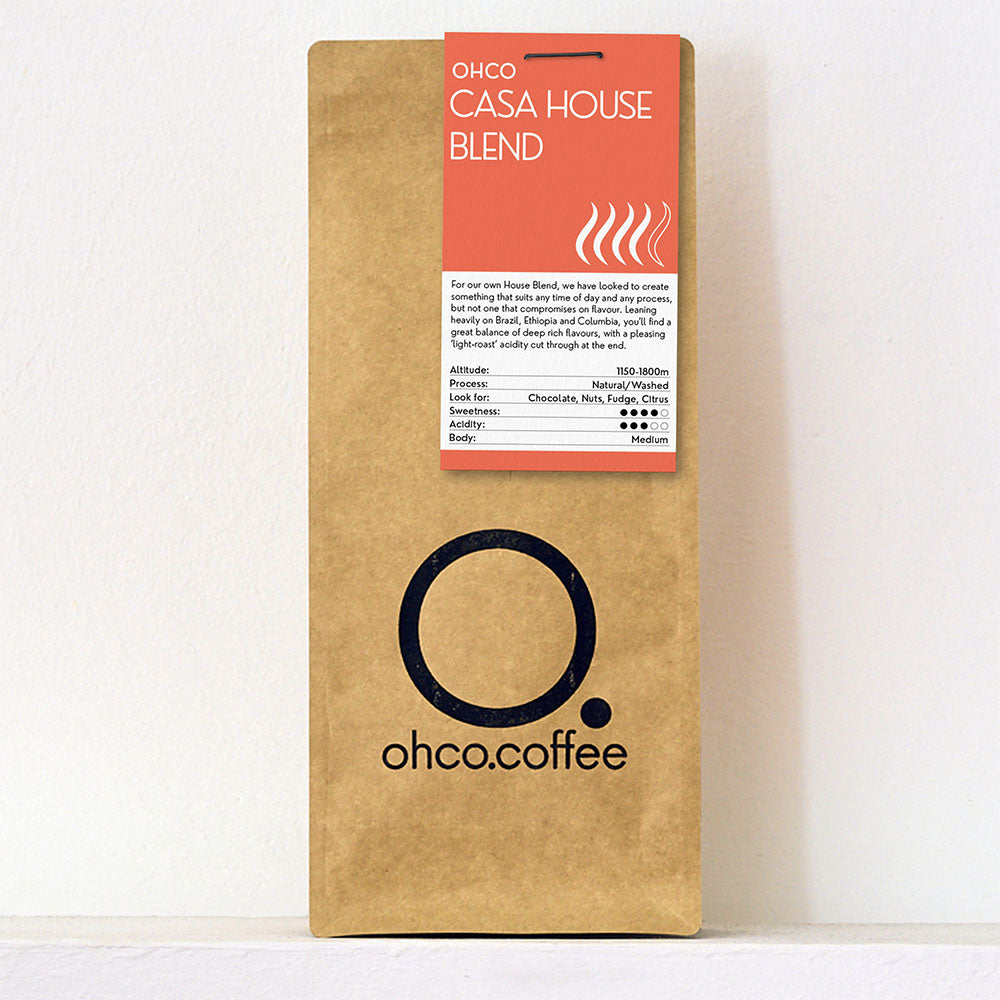
Not sure where to start? Casa OHCO House Blend is our all-day coffee, with deep chocolate notes and a clean finish. It works for espresso, filter and cafetière.
Grind fresh, taste the difference
If you're buying pre-ground, a grinder is the single biggest upgrade you can make. Whole beans hold their flavour for weeks; ground coffee loses most of its aroma within a day. A good hand grinder like the Hario Kabuto or the Comandante C40 takes a minute and makes every bag taste better.
Prefer to buy in person? Visit our café at Hursley Park and we'll grind your beans fresh at the counter for whatever brewer you use.
Frequently asked questions
What is the best way to store coffee beans?
Keep whole beans sealed away from air, light and heat. A zip-seal coffee bag, like ours, works well as long as you squeeze out the air and close it properly each time; otherwise use an opaque airtight container in a cool, dark cupboard. Grind only what you need just before brewing. Avoid the fridge, and freeze only beans you won't use within a few weeks, in single-week portions.
Should you keep coffee beans in the fridge?
No. Fridges are humid and full of food smells, which coffee absorbs, and condensation forms each time you take the beans out. A cool cupboard is better for beans you'll use within a month; the freezer is better for longer.
How long do coffee beans stay fresh after roasting?
Most coffees taste their best from a few days to about a month after roasting, stored well. After that they're still safe to drink but the sweetness and aroma fade. Check the roast date rather than the best-before date.
How can I tell if my coffee beans are stale?
Stale beans smell faint or like cardboard, don't bloom when hot water hits the grounds, and brew a flat, papery cup. Espresso from stale beans runs fast with thin, pale crema. A sour or crayon-like smell means the oils have gone rancid.
Is it better to buy whole beans or ground coffee?
Whole beans. Ground coffee loses most of its aroma within a day because so much more of it is exposed to air. If you don't have a grinder yet, buy smaller amounts of ground coffee more often.